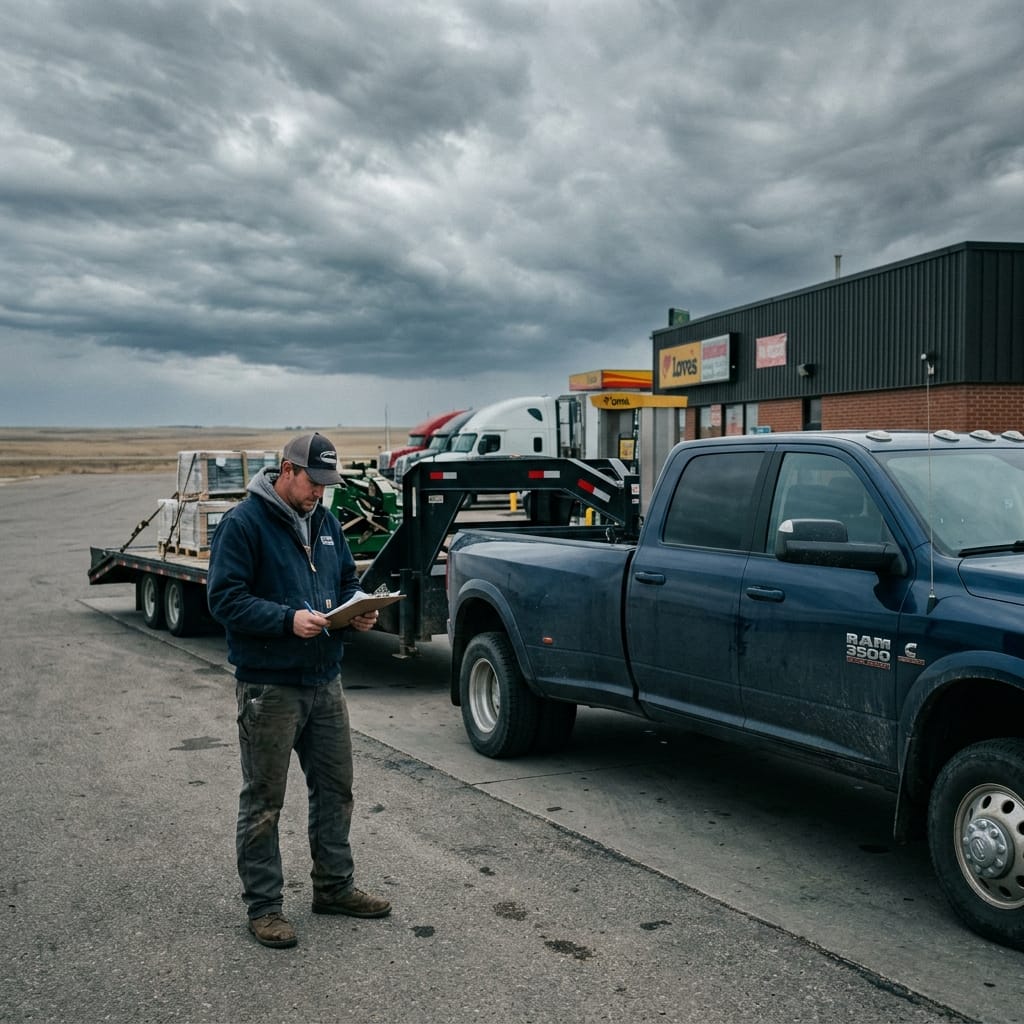
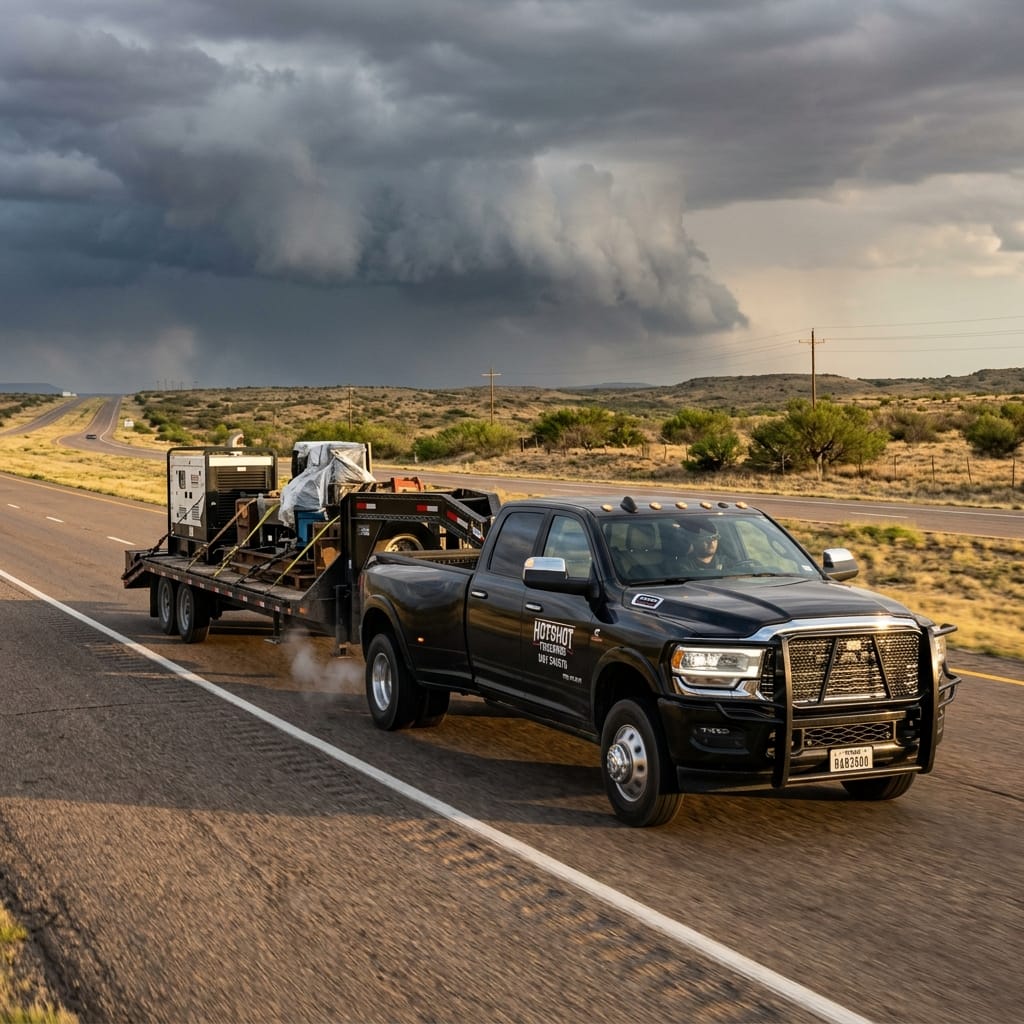
Running a Ram 3500 dually with a 40-foot gooseneck seems like a cheap ticket into OTR trucking, but the financial math for hotshots is brutal. Since your trailer is smaller, every dollar of operating cost counts twice. To see if this setup is still viable in the current market, read our analysis: is hotshot trucking profitable in 2026?
Hotshot trucking operates under a distinct set of operational metrics compared to traditional Class 8 trucking. Pulling loads with a dually truck requires a specialized mathematical approach to expense tracking. For Class 8 commercial semi-trucks, check out our main Trucking Profit Calculator.
The non-CDL numbers game: Managing hotshot operational limits
Non-CDL setups must keep the combined gross vehicle weight rating (GVWR) of the truck and trailer under 26,000 lbs. This avoids commercial driver’s license (CDL) requirements, but it limits your physical cargo capacity to roughly 10,000 to 12,000 lbs.
Because your payload capacity is limited, brokers pay lower gross rates for hotshot freight—typically averaging $1.80 to $2.30 per mile in 2026. For a complete lane-by-lane regional pricing guide, see our guide on hotshot trucking rates per mile.
To stay profitable, you must capitalize on accessorial fees. Don’t throw your tarps, straps, or chains for free. Charging $50 to $150 in accessory fees can turn a break-even run into a highly profitable haul.
Accelerating depreciation: Key expenses unique to dually fleets
Many new operators fail because they treat their pickup truck like a semi. Pickup trucks running OTR cargo depreciated much faster than Class 8 trucks:
- Accelerated Maintenance: Engine oil, transmission fluid, brakes, and front-end components wear out quickly when loaded to capacity OTR. Budget at least $0.15 per mile as a maintenance reserve to cover these items before they surprise you on the road.
- Fuel Consumption Shifts: Empty pickups get decent fuel mileage (12–15 MPG), but pulling a loaded gooseneck drops your efficiency to 9–10 MPG. You must model your variable costs around loaded MPG, not empty highway ratings.
- Insurance Costs for New Authorities: Brokers won’t work with you without a $1,000,000 liability policy. New hotshot authorities face high commercial auto premiums, which can run $1,000 to $1,500+ per month. To budget for your complete business setup and cash reserves, read our checklist of hotshot trucking startup costs.
Our calculator integrates these variables, including dually MPG ratings, pickup maintenance reserves, and specialized flatbed tarp fees, to give you an accurate view of your net profit per trip. To evaluate individual hotshot dispatch broker load sheets for factoring fees and empty miles, try our Dispatch Load Calculator.
Inside the hotshot profit engine math
Our calculation model factors in pickup truck fuel curves under weight loads and flatbed loading times. Operational safety limits are referenced from the FMCSA and spot market rates from DAT Freight & Analytics.
[!WARNING] Planning Disclaimer: This tool is designed for operational modeling. Use for planning, not accounting. Consult a licensed CPA for tax calculations and business structures.