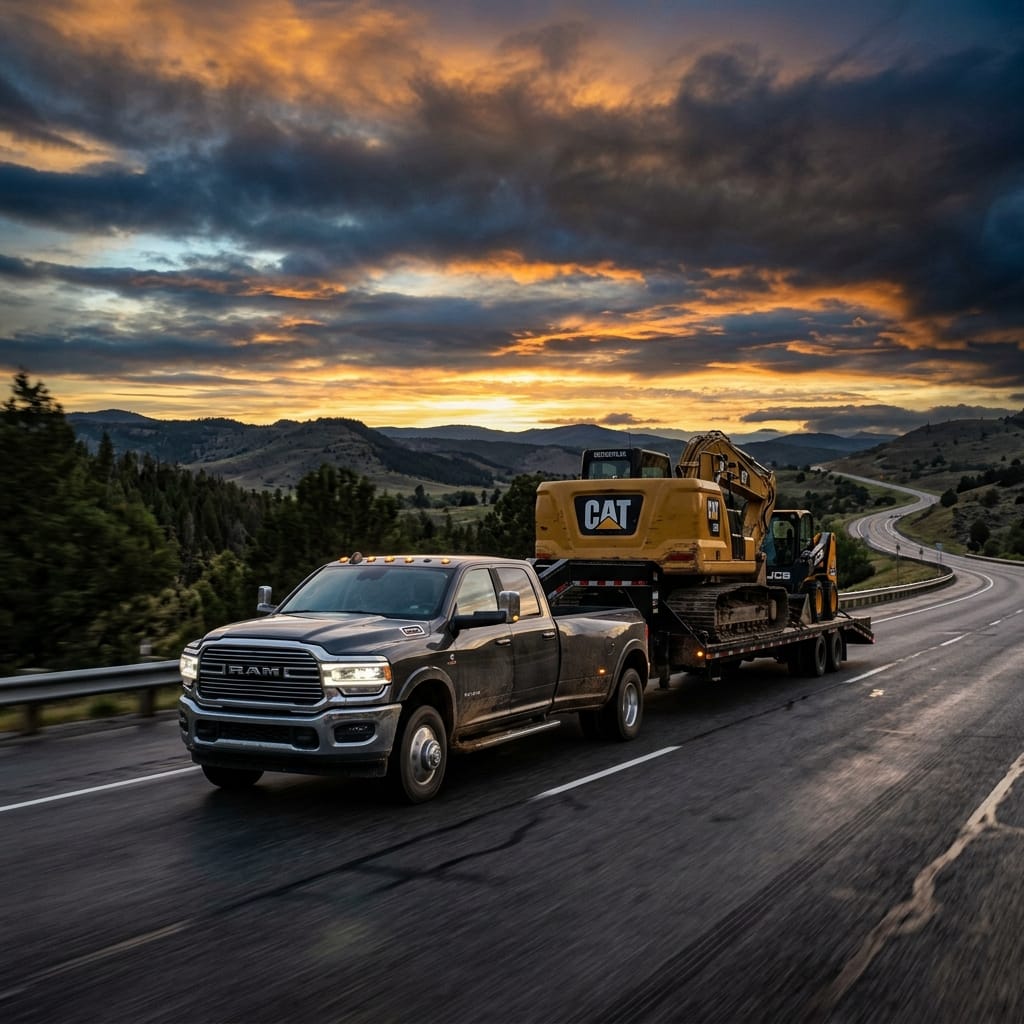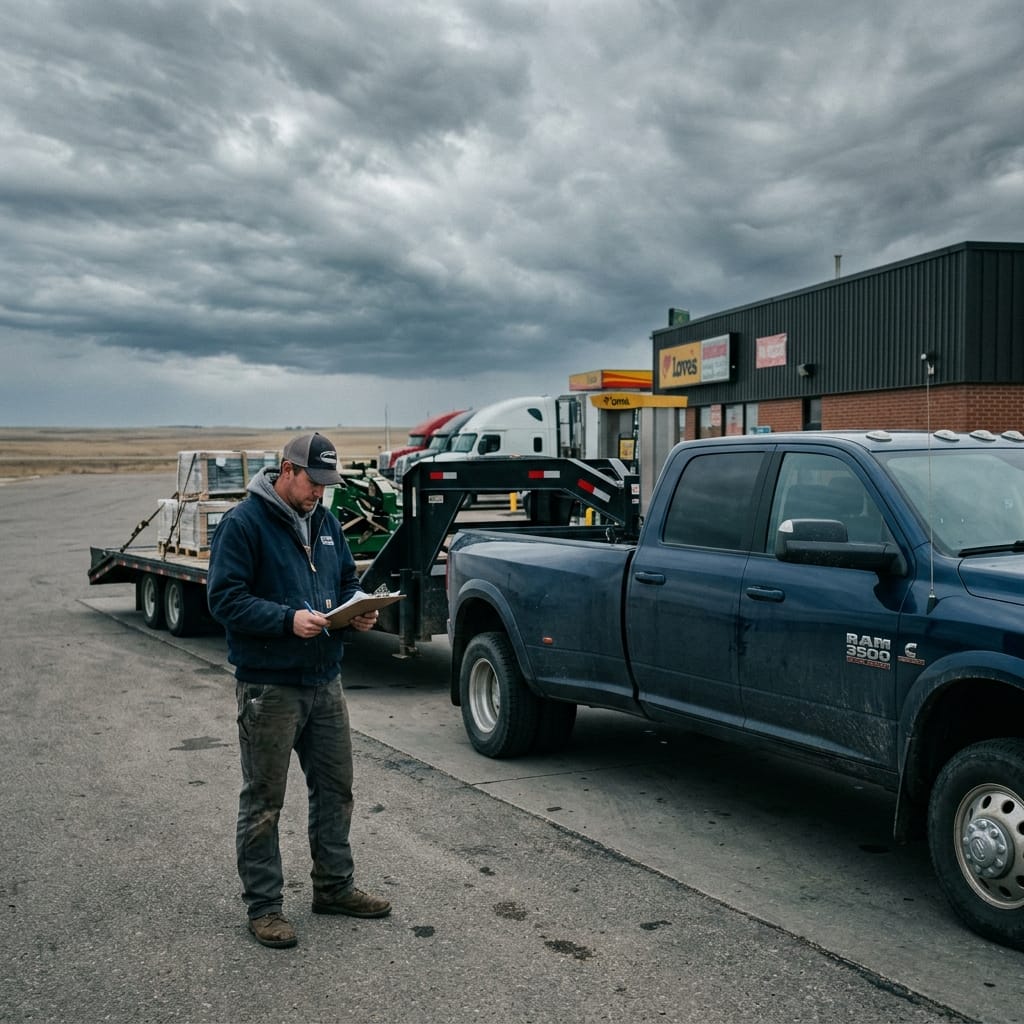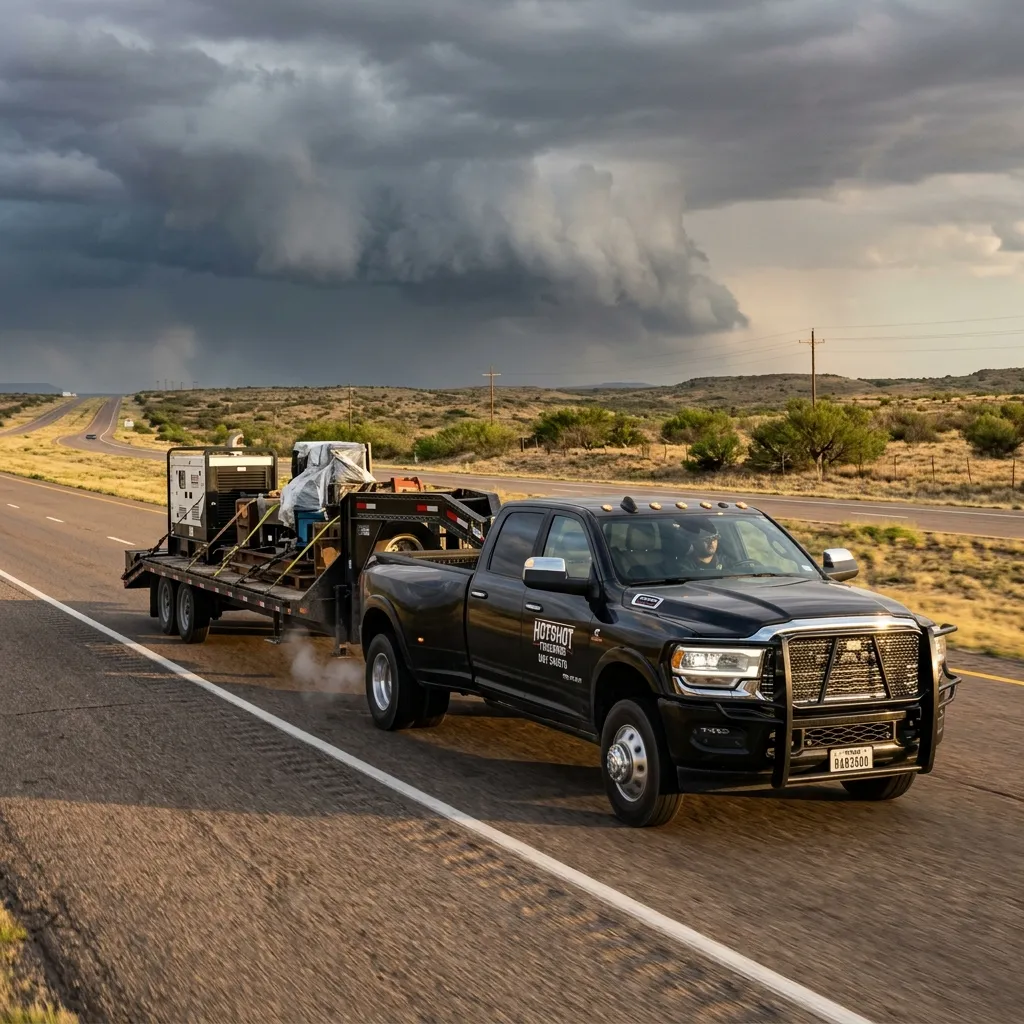
If you think you can pull a 40-foot gooseneck for Class 8 rates, the spot board is going to give you a harsh reality check.
In 2026, average hotshot rates hover between $1.80 and $2.30 per mile, which means your survival depends on accessory billing and tight routing. Running a medium-duty dually pickup truck (like a Ram 3500 or Ford F-350) paired with a 40-foot flatbed trailer is a popular entry point to OTR transport, but it requires a strict focus on operating margins because every dollar of operating cost counts twice.
Here is the realistic look at average hotshot rates, regional lane benchmarks, CDL vs. non-CDL rate realities, and how to negotiate above the spot boards.
2026 Hotshot spot rate benchmarks by region
Hotshot freight rates fluctuate constantly based on local industrial activity, ports, and equipment capacity. If you run lanes without studying regional capacity imbalances, you will get stuck in deadhead traps.
1. The Texas Oilfield Corridor (West Texas / Permian Basin)
- Average Rates: $2.50 to $3.50+ per mile
- The Reality: This is the highest-paying hotshot region in the country. Shippers pay a premium to move drill pipe, tools, and pump equipment to oil rigs immediately. However, variable costs are higher here due to rough lease roads, accelerated tire wear, and high fuel pricing at regional stations.
2. The Southeast Industrial Lane (Georgia, Alabama, Carolinas)
- Average Rates: $1.90 to $2.40 per mile
- The Reality: The Southeast offers consistent manufacturing and construction cargo, making it a reliable lane for regional flatbed runs. However, deadheading out of Florida is a major trap. Inbound loads to Florida pay well, but outbound loads often pay a miserable $0.80 to $1.20 a mile. You must price your inbound rate high enough to cover the empty miles back to Georgia.
3. The Midwest Manufacturing Belt (Ohio, Indiana, Illinois)
- Average Rates: $2.00 to $2.50 per mile
- The Reality: The Midwest is dense with steel plants, machinery parts, and agriculture tools. Inbound and outbound rates are relatively balanced, which helps keep your deadhead miles low.
4. The Northeast & Metro Areas
- Average Rates: $2.10 to $2.60 per mile
- The Reality: While rates look attractive, the tolls, turnpike fees, and traffic congestion can destroy your margins. Navigating a dually and a 40-foot trailer through toll bridges and tight city roads increases your variable costs by $100+ per trip.
The Weight Divide: CDL vs. Non-CDL Rates
One of the biggest factors dictating your rates is whether you operate under a Commercial Driver’s License (CDL) or run non-CDL.
Non-CDL Setups (Under 26,000 lbs combined GVWR)
To avoid CDL regulations, you must keep the combined GVWR of your truck and trailer under 26,000 lbs. If your truck’s GVWR is 14,000 lbs, your trailer cannot exceed 12,000 lbs.
- Payload Capacity: Capped at roughly 9,500 to 11,500 lbs.
- Rate Impact: You are restricted to light cargo. Brokers know you are limited, and you will compete with thousands of other non-CDL operators on public load boards. Average rates stay near the bottom of the scale ($1.80 to $2.10).
CDL Setups (Over 26,000 lbs combined GVWR)
If you hold a Class A CDL and register your dually and trailer for a higher weight rating (typically using a 14,000 lbs truck and a 20,000 lbs trailer for a 34,000 lbs combined rating):
- Payload Capacity: Increased up to 16,500 lbs.
- Rate Impact: This opens up high-paying industrial machinery, steel coils, and heavy building products. Because there are fewer CDL hotshot operators, you can command 15% to 25% higher rates ($2.30 to $2.80+ per mile). How does this affect your bottom line? Read our in-depth analysis on whether hotshot trucking is still profitable in 2026.
The accessorial billing game: Boosting your trip payout
If you rely solely on the flat per-mile rate offered by the broker, you are leaving money on the table. In hotshot trucking, accessorial fees are the difference between breaking even and taking home a profit.
Always negotiate these additions before you sign the rate confirmation:
- Tarping Fees: Hauling exposed steel or machinery requires protection from moisture. Charging a $100 to $150 tarp fee is standard practice to cover the labor and strap wear.
- Strapping & Chaining: If the load requires specialized chaining, binder work, or oversized securing, charge a $50 accessorial fee.
- Detention Pay: Do not let shippers use your truck as free storage. Demand a clause charging $75 per hour after the second hour of waiting at the dock.
- Toll Reimbursement: If your route requires expensive turnpikes, make sure the broker includes toll reimbursements on the rate confirmation.
To check your trip margins and evaluate if a broker’s spot load sheet covers your actual truck expenses, use our Hotshot Profit Calculator to audit the numbers.
How to negotiate above the spot boards
Negotiating with brokers requires knowing your operating cost per mile (CPM). If you don’t know your break-even number, you can’t negotiate effectively. Furthermore, you must prepare for upfront compliance and equipment investments before starting; check our complete guide on hotshot trucking startup costs.
- Never Accept the First Offer: Brokers always post loads with a buffer. If a load is posted at $2.00 a mile, bid $2.30. Cite your equipment type, immediate availability, and accessorial services (like having 8-foot drop tarps) to justify the rate.
- Work Direct Shippers: Building relationships with local machinery fabricators or steel distributors is the best way to move off public load boards. Direct shippers pay 15% to 20% more because they don’t have to pay a broker commission.
- Chain Your Trips: Do not book a high-paying outbound load without securing a backhaul first. A $3.00/mile outbound load is ruined if you have to deadhead 300 miles back for free.
[!WARNING] Planning Disclaimer: This guide is designed for operational modeling and budgeting. Use for planning, not accounting. Consult a licensed CPA for tax calculations and audits.
Frequently Asked Questions
What is the average hotshot rate per mile in 2026?
How does a CDL affect hotshot trucking rates?
What are accessory fees in hotshot trucking?
Conclusion
Navigating hotshot rates per mile in 2026 requires a clear understanding of your equipment's operating limits and regional market demands. With average rates shifting based on load type and CDL status, calculating your exact cost per mile is non-negotiable. Focus on securing higher-paying gooseneck loads, optimizing backhauls, and negotiating directly with brokers to maximize your rate per mile and protect your bottom line.