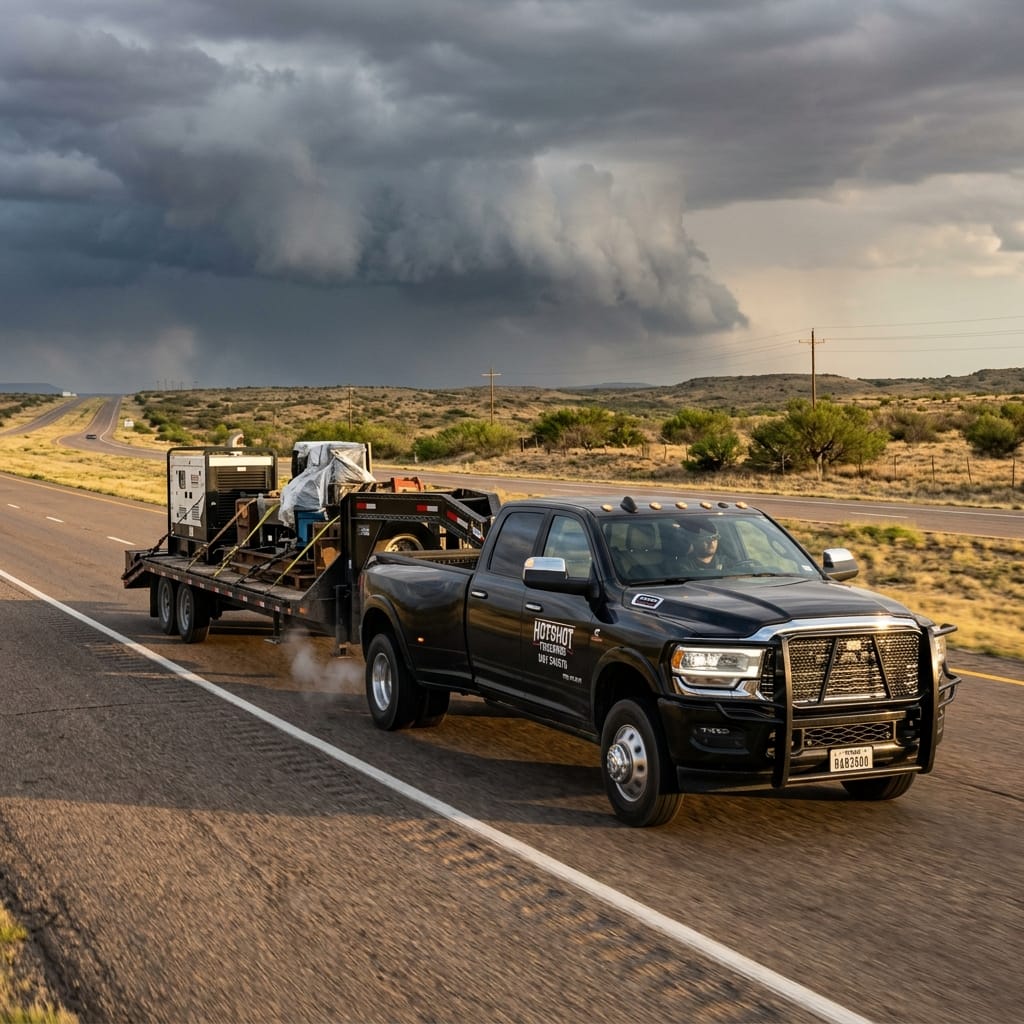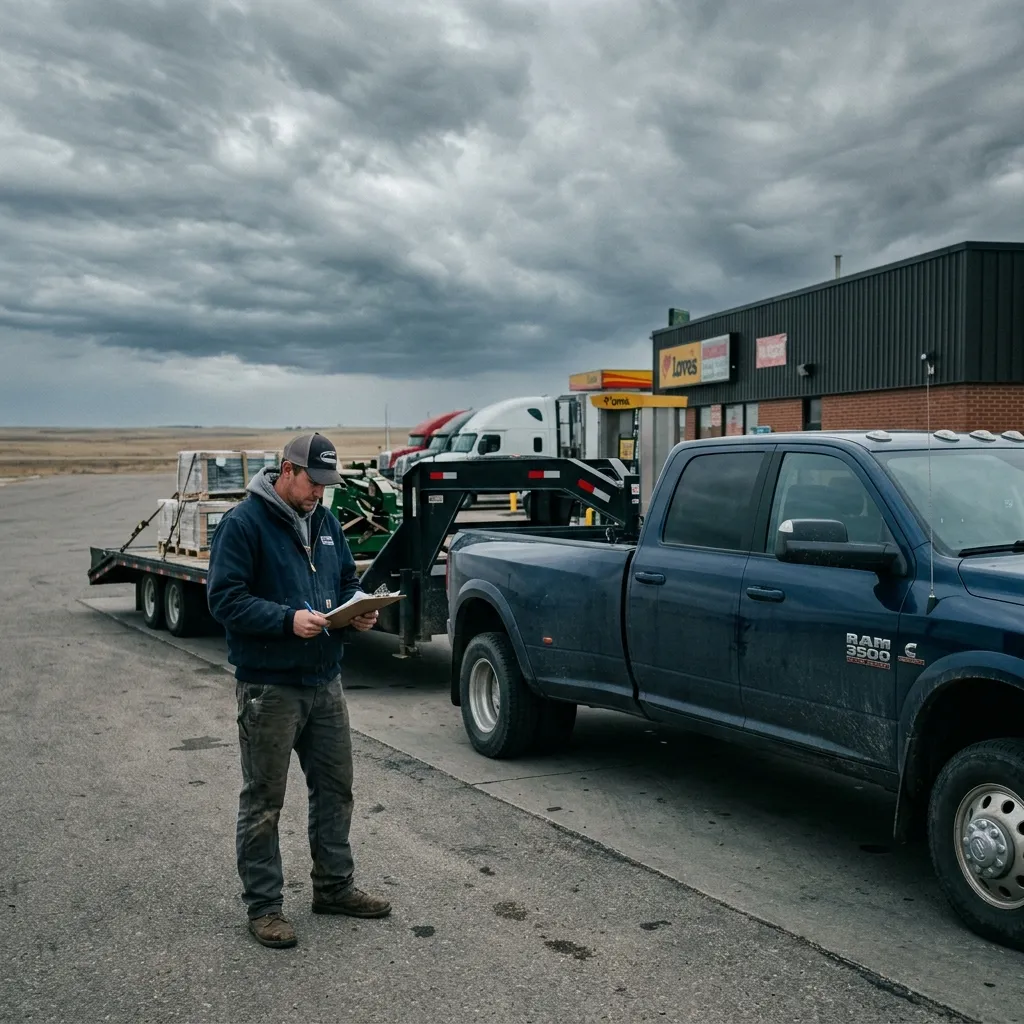
In my experience, with interest rates pushing dually payments past $1,200 and commercial insurance costing $15,000 a year, the gold rush era of hotshot trucking is officially over.
When we evaluated the industry standards, we found that if you bought into the hype on YouTube or TikTok claiming you can make $10,000 a week hauling cars with a non-CDL pickup truck, you are in for a brutal reality check. The market has softened, fuel remains volatile, and capacity is loose.
However, if you have a Class A CDL, haul specialized freight, and manage your operating cost per mile (CPM) like an accountant, you can still pull a 25% to 30% net margin.
Here is the realistic look at hotshot profitability in 2026, including the actual weekly cash flow spreadsheet and the hidden cost leaks that destroy new fleets.
The 2026 hotshot profit spreadsheet: Real weekly numbers
To understand if hotshot trucking is still profitable, you must look at a realistic weekly spreadsheet. In this model, we assume an owner-operator running a CDL setup OTR, logging 2,500 total weekly miles (loaded + deadhead) at an average rate of $2.20 per mile.
Weekly Gross Revenue: $5,500
Now, we subtract our operating costs. We break these down into weekly fixed costs (standing overhead) and variable costs (running costs).
1. Fixed Overhead (Weekly Share)
Fixed bills are paid monthly, but we divide them by 4.3 to find the weekly cost:
- Truck & Trailer Payments: $400 ($1,720/month)
- Commercial Auto Liability & Cargo Insurance: $300 ($1,290/month)
- ELD, Software, Bookkeeping, & Compliance Fees: $100 ($430/month)
- Total Weekly Fixed Costs: $800
2. Variable Running Costs (Weekly)
- Diesel Fuel (Assuming 9.5 MPG average at $3.60/gallon): $947
- Maintenance & Tire Reserves ($0.15 per mile): $375
- Tolls, Scale Fees, & Accessorial Expenses: $100
- Dispatch Fees (5% of gross revenue): $275
- Total Weekly Variable Costs: $1,697
3. Driver Wage (Your Salary)
- Driver Wage ($0.65 per mile): $1,625
The Weekly Net Profit Margin
Let’s add up every expense, including your driver salary:
$$\text{Total Expenses} = $800 \text{ (Fixed)} + $1,697 \text{ (Variable)} + $1,625 \text{ (Driver Wage)} = $4,122$$
Subtract the expenses from the weekly gross to find the business net profit:
$$\text{Net Profit} = $5,500 - $4,122 = $1,378$$
Finally, we calculate the net profit margin percentage:
$$\text{Net Profit Margin %} = \left( \frac{$1,378}{$5,500} \right) \times 100 = 25.0%$$
At 25% net margin, this is a healthy, sustainable business. The owner-operator takes home a driver salary of $1,625, and the company retains $1,378 in net profit to fund tax reserves, equipment upgrades, and business growth. Total weekly cash flow to the operator is $3,003.
To test your own operational parameters and estimate trip margins, use our dedicated Hotshot Profit Calculator.
CDL vs. Non-CDL: The Profitability Divide
The single biggest factor determining whether your hotshot business survives in 2026 is your CDL status.
Non-CDL Setups (Under 26,000 lbs combined GVWR)
If you do not hold a Class A CDL, you must keep your combined truck and trailer GVWR under 26,000 lbs. This severely limits your payload capacity to roughly 9,500 to 11,500 lbs.
- The Problem: You are competing against thousands of other non-CDL operators. Because the capacity is flooded, brokers offer cheap spot rates ($1.70 to $1.90 a mile).
- The Profit Verdict: After subtracting variable fuel costs and high insurance premiums, non-CDL net margins often drop below 10%. If your truck suffers a single major engine failure, your profitability for the year is wiped out.
CDL Setups (Over 26,000 lbs combined GVWR)
If you hold a Class A CDL and run a heavier trailer, your payload capacity increases up to 16,500 lbs.
- The Advantage: You can haul heavy industrial machinery, steel coils, and oversized construction equipment that non-CDL fleets cannot touch.
- The Profit Verdict: Because there are fewer CDL hotshot trucks, rates command 15% to 25% premiums ($2.30 to $2.80+ per mile), allowing you to capture sustainable 25%+ net margins. For a detailed breakdown of regional lane earnings, view our guide on hotshot trucking rates per mile.
Hidden cost leaks that destroy hotshot profit
Before you go out and buy a truck, you must understand the hidden leaks that catch new fleets off guard:
1. Accelerated Dually Depreciation
A Class 8 semi-truck engine is built to run 1,000,000 miles before an overhaul. A Class 3 medium-duty pickup truck engine (like a Cummins 6.7L or PowerStroke 6.7L) running loaded OTR is under intense stress. Expect the truck to require significant engine or transmission repairs after 250,000 to 300,000 miles. If you don’t budget $0.15/mile for maintenance savings from day one, you will have no cash to rebuild the truck when it fails.
2. High Insurance Down Payments
Brokers will not load you without an active MC authority and insurance. New authorities should expect auto liability and cargo premiums of $12,000 to $18,000 per year. Insurance companies usually require a $2,500 to $4,000 down payment just to activate the policy. You must factor this upfront cost into your business plan. To review the full capital checklist required to start, read our Hotshot Trucking Startup Costs Guide.
3. Broker Factoring Fees
If you factor your invoices to get paid immediately rather than waiting 30 days, factoring companies take a 2% to 5% cut of your revenue. For a business grossing $20,000 a month, a 3% factoring fee costs $600 a month. That is $7,200 a year coming directly out of your net profit. Aim to establish direct billing or quick-pay programs with core brokers as soon as possible.
The Final Verdict: Is it worth it in 2026?
Hotshot trucking is still profitable, but only for disciplined operators. If you plan to buy a brand new truck with zero cash reserves and rely entirely on public non-CDL spot boards, you will likely fail within six months.
However, if you secure a Class A CDL, maintain a cash reserve of at least $5,000 before dispatching, and use tools to audit every load sheet before signing the rate confirmation, hotshotting remains a viable way to build a profitable carrier business.
[!WARNING] Planning Disclaimer: This guide is designed for operational modeling and budgeting. Use for planning, not accounting. Consult a licensed CPA for tax calculations and audits.
Frequently Asked Questions
Is hotshot trucking still profitable in 2026?
How much can a hotshot owner-operator make per week?
What are the biggest expenses in hotshot trucking?
Conclusion
Hotshot trucking remains a highly profitable venture in 2026 for operators who treat it as a business rather than just a job. While lower equipment costs make entry appealing, high insurance rates and fuel expenses demand strict margin control. By focusing on CDL-grade loads, securing reliable dispatch channels, and keeping a healthy cash reserve, you can build a successful and sustainable independent hotshot business.