Every week someone sells a truck on YouTube claiming they turned a $5,000 beater dually and a borrowed trailer into a six-figure hotshot empire in 90 days.
That content gets millions of views. It also sends unprepared operators straight into bankruptcy because it skips the $20,000 in upfront costs you need before a broker will even answer your call.
Here is the actual financial reality of starting a hotshot trucking business in 2026 — equipment costs, insurance barriers, federal filing requirements, and the operating cash buffer you need to survive the first 30 days.
What “startup costs” actually means in hotshot trucking
When trucking educators talk about startup costs, they usually focus on the truck and trailer. That is only half the picture.
Starting a legal hotshot operation requires capital across four separate buckets:
- Equipment down payments (truck and trailer financing)
- Commercial insurance activation (the largest cash barrier)
- Federal and state authority filings (DOT/MC compliance)
- Operating cash reserves (fuel, maintenance, and living expenses for 30 days)
Most new operators calculate bucket one, ignore buckets two and three, and have no concept of bucket four. That is why so many hotshot businesses collapse inside the first quarter.
Bucket 1: Equipment — Truck and Trailer Down Payments
The Dually Truck
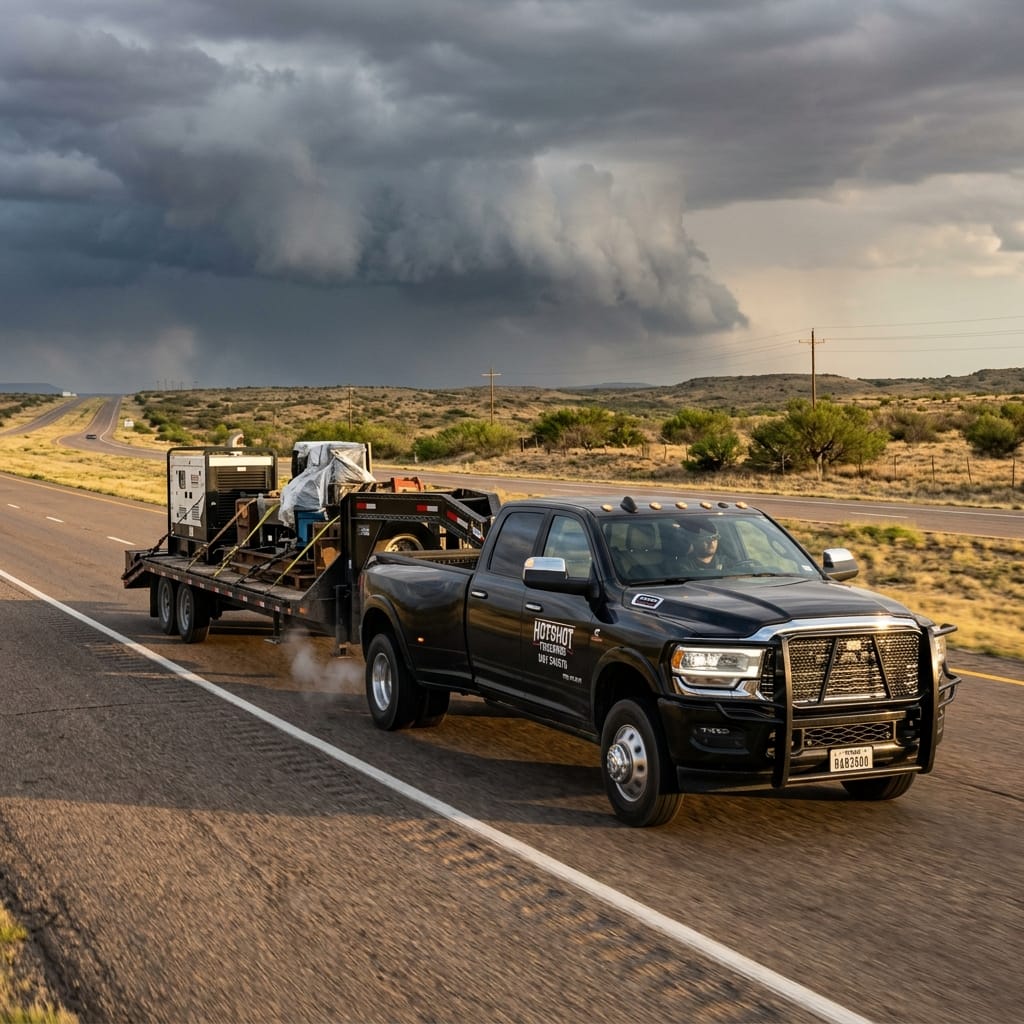
The hotshot workhorse is a heavy-duty Class 3 dually pickup: a Ram 3500, Ford F-350, or Chevrolet 3500. These trucks have the towing ratings (19,500 to 21,500 lbs max tow capacity) and diesel powertrains (Cummins 6.7L or PowerStroke 6.7L) required for commercial gooseneck loads.
Used truck pricing in 2026:
- A 2019 to 2022 model with 80,000 to 120,000 miles costs $65,000 to $80,000 at a commercial dealership.
- A 2016 to 2018 model with 150,000+ miles runs $45,000 to $60,000 but comes with higher maintenance risk.
Down payment required: Most commercial truck lenders require 10% to 20% down depending on your business credit score, time in business, and FICO. For a $72,000 truck, expect to put down $8,000 to $14,000. If your business credit is under 650 or your authority is under 2 years old, lenders may require 20% to 25% down or co-signers.
Pro tip: Always check the truck’s CARFAX and get a pre-purchase inspection by a diesel mechanic before signing. A single missed engine repair on a used truck can cost $8,000 to $15,000. That expense alone can eliminate your operating reserves for the year.
The Gooseneck Trailer
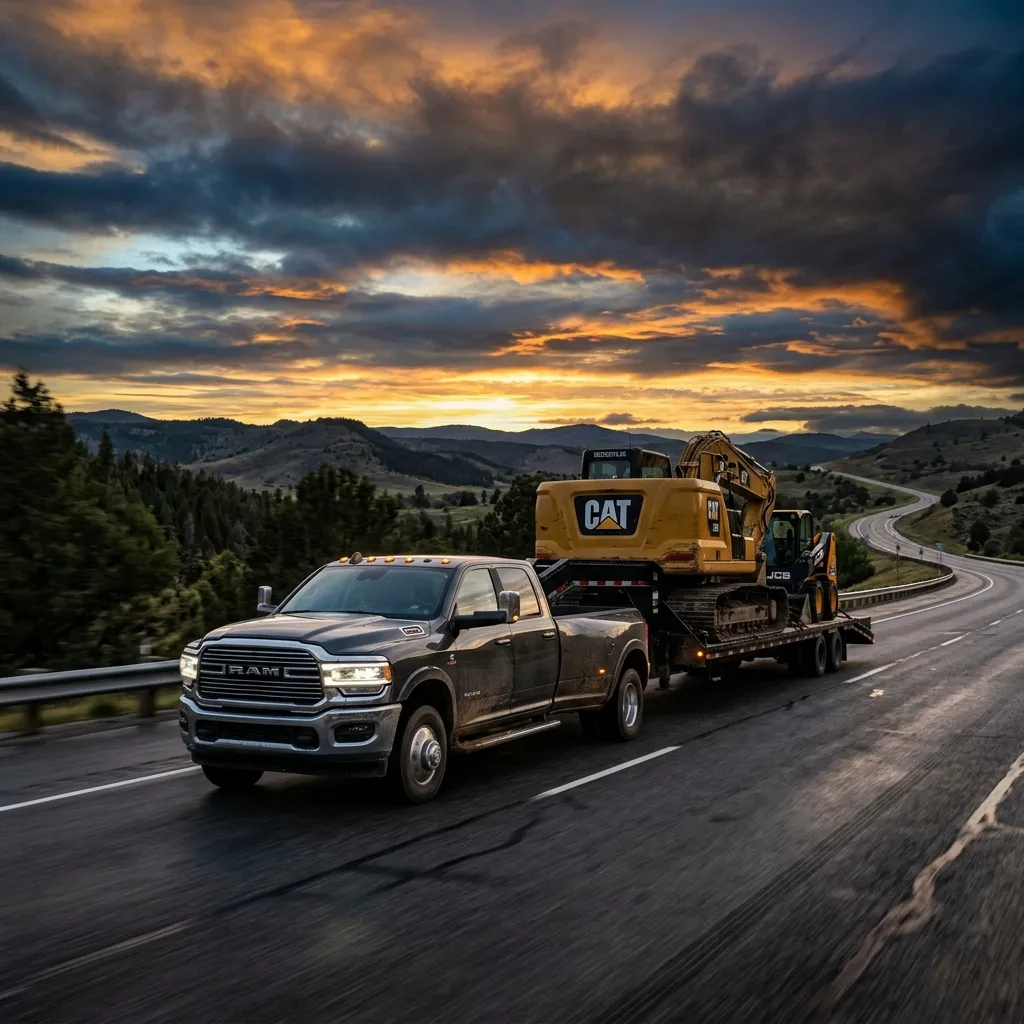
The standard hotshot configuration is a 40-foot to 53-foot flatbed gooseneck with dovetail and mega ramps for loading heavy equipment.
Trailer pricing in 2026:
- A new 40-foot gooseneck from a reputable manufacturer (PJ, Big Tex, Load Trail) costs $14,000 to $22,000.
- A used trailer in good condition (3 to 7 years old) with verified frame welds costs $8,000 to $14,000.
Down payment required: Trailer financing requires $2,000 to $4,500 down for a new unit. If you are buying used with cash, aim to spend no more than $10,000 to preserve your operating buffer.
I recommend buying a new trailer and a used truck rather than a used trailer and a new truck. The trailer is simpler mechanically — there is very little to go wrong. The truck is where catastrophic failures happen. A used truck with verifiable service history is a calculated risk. A used trailer with unknown weld stress is a liability on the highway at 70 mph.
Total Estimated Equipment Down Payments: $10,000 to $18,500
Bucket 2: Commercial Insurance — The Biggest Cash Barrier
This is the item that surprises every first-time hotshot operator. You cannot legally haul freight on a commercial authority without active insurance. And activating that insurance requires a significant upfront cash payment.
What coverage is required?
Brokers and shippers require:
- $1,000,000 Combined Single Limit (CSL) Auto Liability — covers bodily injury and property damage to third parties.
- $100,000 Cargo Insurance — covers the freight you are hauling if it is lost or damaged.
- Physical Damage Coverage — optional, but required by your lender if the truck is financed.
What does it cost?
New hotshot authorities with less than 2 years of operating history pay a significant risk premium. In 2026, expect:
- Annual premium: $12,000 to $18,000 for combined auto liability and cargo insurance.
- Down payment to activate the policy: $2,500 to $4,500 (typically 20% to 25% of the annual premium).
- Monthly installments: $800 to $1,200 per month after the down payment.
If you add physical damage coverage on a $72,000 truck, the annual premium increases by $2,000 to $4,000, pushing your monthly insurance burden to $1,200 to $1,600 per month.
Why do new authorities pay more?
Insurance carriers treat new MC authorities as high-risk. Statistically, 40% of new trucking authorities fail within the first 18 months. Insurers price that risk into the premium. After 2 years of clean claims history, your premium typically drops 15% to 25%.
Total Estimated Insurance Startup Cost: $2,500 to $4,500 down payment
Bucket 3: Federal and State Authority Filings
Before you can operate as a for-hire motor carrier across state lines, you must complete multiple federal and state registrations.
Federal Motor Carrier Safety Administration (FMCSA) — MC Authority
Filing the OP-1 form with the FMCSA creates your Motor Carrier (MC) number. The filing fee is $300. After filing, there is a mandatory 21-day protest period. If no competitor protests your application, the MC number activates roughly 4 to 6 weeks after filing.
You cannot legally haul for-hire freight across state lines until the MC authority is active.
USDOT Number
Your USDOT number is your federal identification for safety audits and inspections. It is issued free of charge through the FMCSA’s Unified Registration System (URS) when you file for MC authority.
BOC-3 Process Agent Filing
The BOC-3 designates legal agents in every state who can accept service of legal process on your behalf. You cannot get your MC authority without a BOC-3 on file. Third-party filing services handle this for $30 to $50 as a one-time fee.
Unified Carrier Registration (UCR)
The UCR is an annual registration fee paid to the state in which your business is based. For a single-truck operation, the 2026 UCR fee is $69 per year.
International Registration Plan (IRP) — Apportioned Plates
If you operate across multiple states, your truck must carry IRP apportioned plates instead of standard state plates. IRP registration fees are calculated based on the percentage of miles you run in each state. For a typical multi-state hotshot route, expect $600 to $1,200 for the first year’s IRP registration.
2290 Heavy Vehicle Use Tax (HVUT)
If your truck’s gross vehicle weight rating (GVWR) exceeds 55,000 lbs (which applies if you have a CDL setup), you must pay the annual IRS 2290 HVUT. For 2026, the standard annual 2290 tax on a 55,000+ lb vehicle is $550. To decide if going CDL is worth the extra compliance and equipment costs, check our analysis on whether hotshot trucking is still profitable in 2026.
Drug and Alcohol Testing Consortium
FMCSA requires all CDL holders operating as owner-operators to enroll in a drug and alcohol testing consortium. Annual enrollment runs $100 to $200 per year.
Total Estimated Compliance Startup Costs: $1,200 to $2,500
Bucket 4: The Operating Cash Reserve — The One That Kills New Operators
This is the bucket that no one on YouTube talks about because it is not exciting. But it is the difference between surviving your first 90 days and shutting the business down with a repossessed truck.
The 30-Day Invoice Gap
Most freight brokers pay on net 30 to net 45 terms. That means you haul a load today, deliver it on Thursday, and the broker deposits your check in 30 to 45 days. During that gap, your fixed expenses — truck payment, insurance, compliance — do not pause.
If you run $5,500 in gross revenue in your first week and spend $4,200 in expenses, you have $1,300 in net profit on paper. But you will not see that cash for 30 days. Meanwhile, you need diesel for next week’s loads.
Factoring as a Short-Term Bridge
Freight factoring companies purchase your invoices immediately (same-day or next-day payment) in exchange for a 2% to 5% factoring fee. On a $5,500 weekly gross, a 3.5% fee costs $192. Over a month, that is $768 disappearing from your revenue.
Factoring is a useful tool for cash flow management in your first 6 months. But it is not free money — it is a cost of capital that must be factored (no pun intended) into your CPM calculations. The cost of factoring will directly eat into your trip rates; see what rates you should target in our guide on hotshot trucking rates per mile.
Minimum Recommended Cash Buffer
Before you dispatch your first load, you should have a minimum of:
| Reserve Category | Recommended Amount |
|---|---|
| Fuel reserve (30 days of diesel) | $3,000 to $5,000 |
| Emergency mechanical reserve | $2,000 to $3,000 |
| Personal living expenses (30 days) | $2,500 to $4,000 |
| Total Minimum Cash Buffer | $7,500 to $12,000 |
Running with less than this in your account is not aggressive entrepreneurship — it is a preventable business failure waiting to happen.
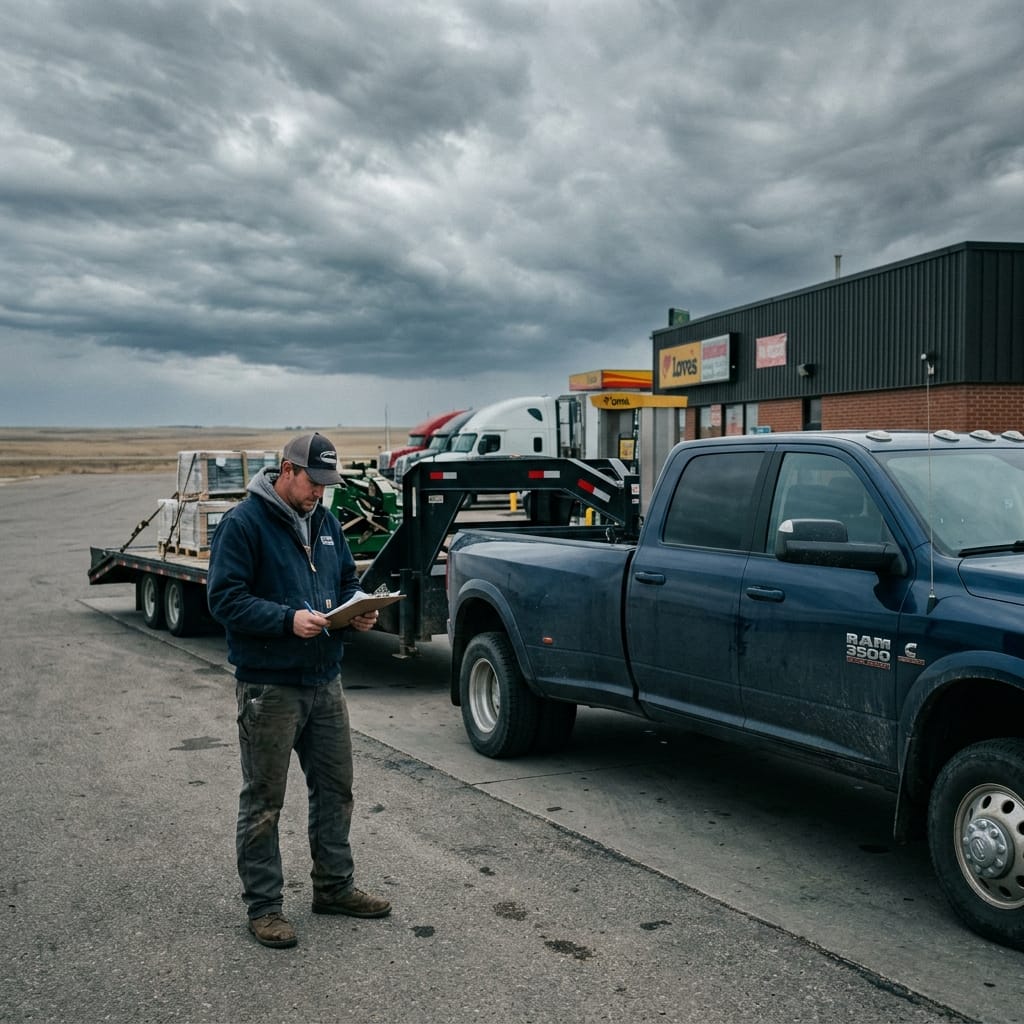
 *Calculating startup costs carefully before launching your hotshot business helps ensure you maintain a healthy cash reserve.*
Complete Hotshot Startup Cost Summary
| Cost Category | Low Estimate | High Estimate |
|---|---|---|
| Truck down payment | $8,000 | $14,000 |
| Trailer down payment | $2,000 | $4,500 |
| Insurance activation | $2,500 | $4,500 |
| Federal/state filings | $1,200 | $2,500 |
| Operating cash reserve | $7,500 | $12,000 |
| Total Capital Required | $21,200 | $37,500 |
The midpoint is roughly $29,000. If someone tells you that you can start a legal, commercial hotshot operation for under $10,000, they are either describing an illegal operation or they are selling a course.
What to do before spending a dollar
- Pull your personal and business credit reports. Lenders set down payments and interest rates based on your credit. A 700+ credit score can save $3,000 to $5,000 on a truck loan over the term.
- Get insurance quotes before buying the truck. Call 3 to 5 commercial trucking insurance brokers and request quotes for a new authority. Know your monthly insurance burden before you sign the purchase agreement.
- Model your monthly cash flow. Before you commit capital, build a monthly P&L model using your actual projected miles, your target lanes, and your confirmed operating costs.
Use our Hotshot Profit Calculator to model your weekly revenue vs. expense projections before you put money down on equipment.
[!WARNING] Planning Disclaimer: This guide is designed for operational modeling and budgeting purposes. Use for planning, not accounting. Consult a licensed CPA or attorney for personalized tax and legal advice.
Frequently Asked Questions
How much does it cost to start a hotshot trucking business in 2026?
Is a CDL required for hotshot trucking?
What is the cheapest legal way to start hotshot trucking?
How long does it take to get MC authority for hotshot trucking?
Conclusion
Starting a hotshot trucking business in 2026 requires more than just a truck and a trailer. With upfront capital requirements hovering around $29,000, successful operators must budget carefully for insurance, regulatory filings, and a robust 30-day cash reserve. By doing your research, securing competitive insurance rates, and modeling your margins beforehand, you can build a resilient, profitable business that outlasts the critical first year.